 For most of 2017, it feels like we’ve been strapped into Mr. Toad’s Wild Ride and forbidden from getting off (the Haunted Mansion just taunting us in the distance, people casually chomping on Mickey Mouse ice cream bars, enormous turkey legs, and Dole Whips while we starve to death in our carts… man, I’ve got to stop writing these things before lunch). And just when you thought it couldn’t get crazier, after weeks of rumors and negotiations, it seems all but certain that the Fox company is ready to sell off its entertainment branches to the Walt Disney Corporation and Shadow Government. This is a huge deal with massive implications for many aspects of media and popular culture, and frankly, I’m not in the mind to talk about all of them considering how many poop-filled diapers I’ve had to deal with lately.
Disney has been an acquisition machine for years now, gobbling up Pixar, then the Muppets, then Marvel and Lucasfilm. Let’s face it, they’re one Walmart merger away from total world domination. And certainly, with the Fox entertainment properties under the Disney roof, a lot of things would change. But there are a million thinkpieces out there about that. Instead, let’s take a minute to mention a couple of the things I hope don’t change too much with the new Disney-Fox Global Consortium firmly in place.
1. The autonomy of the 20th Century Fox movie studio: Fox is one of the grand old dames of the movie business, having been around since 1935 and giving us hundreds of classic, timeless, unforgettable films, and also James Cameron’s Avatar. Disney, of course, has its own cinematic pedigree. The big difference here is that Fox’s films have run the gamut of genre and audience types. The Disney brand, however, is far more associated with family fare. Even bringing in Marvel and Star Wars hasn’t changed that dramatically — while those properties may hit an older audience than The Little Mermaid, there’s still nothing there you may be uncomfortable watching with your mom in the room.
Fox, on the other hand, gave us the likes of Aliens, Predator, Planet of the Apes, Die Hard, and hundreds of other films (both wonderful and terrible) that would be an odd fit under the Disney banner. If Disney simply folds all of these into their current operations, it seems unlikely that these franchises or others of a similar temperament would have a home. On the other hand, Disney doesn’t really have an arm that makes entertainment for older audiences anymore. Miramax was sold off a few years ago, and their Touchstone banner is basically just a distribution arm these days, not having made any films of its own in nearly a decade. If 20th Century Fox is allowed to continue, it could fill that niche in the Disney portfolio of films for older audiences.
2. Animation “Domination.” Disney, for decades, was the undisputed juggernaut of animation in film. Its television competitors — even when the likes of Hanna-Barbera created memorable characters — often paled in comparison to Disney quality. That has changed drastically in the last two decades, with Dreamworks, Warner Brothers, Universal, and — yep — Fox stepping up their game to create franchises that legitimately compete with Disney. And on TV, Fox has a foot in something that Disney has never truly dabbled in: animation for grown-ups.
The Simpsons, obviously, is the perennial classic. Futurama was even better. King of the Hill is remembered fondly, Bob’s Burgers is the current Emmy-winning darling. Family Guy is… also a thing. Hopefully, Disney won’t curtail these things or try to reshape them into the mold of their own animated properties. Things like Ducktales, Gravity Falls, Phineas and Ferb and Milo Murphy’s Law are great, but it would be a shame if the rules that govern those shows were to be shifted over to the Belcher family.
3. Fox’s Marvel Universe. Yeah, the one thing that everybody wants is to see the X-Men interact with the Marvel Cinematic Universe. Hugh Jackman even suggested once that doing an Avengers movie would be the only way he’d play Wolverine again. And has any superhero franchise ever needed a new approach as desperately as the Fantastic Four?
But having said that, I honestly think it’s a good thing that, when the MCU started, Marvel didn’t have all of their big guns under one roof. If they’d had the FF, X-Men, and Spider-Man, do you think Marvel’s first film would have been Iron Man? Hell no. They played with the toys that were left in the box, and as a result, they did something excitingly different that has paid off in spades. If they could have made an X-Men movie, would they have gambled on something like the Guardians of the Galaxy? Would we have seen Ant-Man or Dr. Strange on the screen? It seems highly unlikely.
And on the other side, look at the X-Men films. Okay, Wolverine and Deadpool are popular enough that they could have probably landed their own movies eventually. But at present, Fox does two or three X-Men films a year. So does the MCU. If they’re all folded under one banner, that’s likely to halve the output. Those same three guys on the internet who keep complaining that there are too many superhero movies will probably be thrilled, of course, but what about the rest of us? With the MCU only having room for one X-movie a year, would we get weird things like the upcoming New Mutants movie (which, as per the trailer, seems more like a horror film than a superhero movie), or the Madrox film with James Franco that was just announced? No, not every Fox X-Men film has been gold, but I think it’s worth the risk of the occasional clunker to have the chance to do things like Logan, which would never fit into the MCU.
The best-case scenario, I think, would be for an arrangement similar to the Marvel/Sony deal for Spider-Man, where crossover is allowed, but each company (or in this case, each Disney subsidiary) is mostly allowed to do its own thing.
As always, though, this is just me spitballing. What actually happens with all of this is going to be up to 2018 to decide. May it be a little tamer than its predecessor, because I for one couldn’t take 2017 all over again.
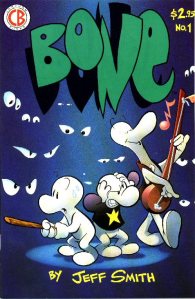 I recently finished a re-read of Jeff Smith’s series Bone, a comic I dearly loved when it was published originally in the 90s and early 00s, and one that I’m happy to report still holds up marvelously. For the first few issues (or chapters, for those who read it in collected editions), it seems as though this comic will be a sweet, funny tale about three cartoonish characters driven out of their home and forced to make a new one in a strange valley with bizarre creatures. The tone shifts rapidly, though, and it soon becomes clear that Bone is really an epic fantasy series, full of adventure and mysticism that shares more DNA with the likes of Lord of the Rings than Garfield.
 A Bone TV show would be the best way to explore the rich world Jeff Smith created in his 55 issues (and assorted specials and spin-offs), allowing the audience to learn the whole story in its beautiful complexity instead of truncating it to the measly 90 minutes it would likely get on the big screen. The show would, of course, have to be animated – you simply can’t capture the charm of the Bone cousins in live action and having CGI avatars of them interacting with real humans would, frankly, look silly. But how do you sell a TV network on a fantasy cartoon series with a predetermined end date?
 But you’ll notice this superhero content is almost exclusively DC and Marvel. There’s nothing wrong with mining those universes for content, but there’s got to be room for some variety. So combining this with TV’s love for serial stories, I’d love to see Mark Waid and Peter Krause’s Irredeemable make it to the screen. Originally published by BOOM! Studios, this series explores a world where the most powerful superhero of them all, the Plutonian, is driven mad and turns against the world. Although many of the themes would later show up in the better-known Injustice: Gods Among Us, Irredeemable not only did it first, but it goes to even darker places. Also, since it isn’t dependent on using the existing DC superheroes, Waid had the freedom to twist his characters in ways even Injustice wouldn’t dare to do. And finally, unlike Injustice – which will keep on going as long as the video game series it’s based on is profitable – Irredeemable had a solid ending that managed to finish with an air of hope despite the harsh world in which it was incubated. To be honest, the ending is probably the biggest strike against bringing Irredeemable to television. While it works very well in comics, there’s a strong metafictional aspect to it that may be difficult to pull off on the screen. But damn, I’d love to watch them try.
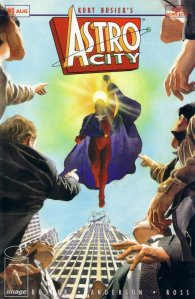 Astro City, if you have somehow never read it, is a series about a superhero universe that includes pretty much all of the tropes of superhero comics, but with twists. Samaritan (the Superman analogue) is terribly lonely and wants nothing more than to fly uninterrupted. The First Family (think about the initials) is made up of old Doc Savage-style science heroes and their superpowered children and grandchildren. The city’s Darkest Knight, the Confessor, is a Catholic priest who happens to be a vampire. And the thing is, none of these characters ever take the spotlight full-time. For most of its life over the past 20 years, Astro City stories have usually been one- or two-issue affairs, with a few rare six-issue tales. The longest story to date “The Dark Age,” ran for 16 issues. Even that, though, was broken up into a quartet of four-issue “Acts” with other short stories in-between.
 In case you somehow missed it, DC Comics recently announced a new upcoming line-wide initiative they’re calling DC Rebirth. Details – except for the titles of the books – have been sparse thus far, but that’s never going to be an obstacle to fan speculation or random guessing. What we know for sure, according to Geoff Johns, is that this initiative will use the same core concept as his Green Lantern: Rebirth and Flash: Rebirth stories, that of attempting to respect the present while, at the same time, recapturing the glory of the past. This has me feeling cautiously optimistic. Both of those aforementioned stories were very good, and I’ve thought ever since the New 52 relaunch that the biggest thing missing from DC was their wonderful sense of legacy.
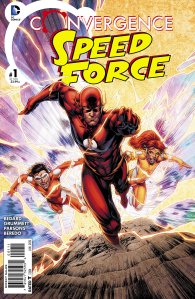 ne of the things the New 52 did was roll back the ages of most of DC’s main characters. In so doing, many of the family units that previously existed were eradicated. The children of Wally West, Roy Harper, Alan Scott and others never existed at all. There was later a hullabaloo when the writers of Batwoman walked off the book, angry that DC wouldn’t allow them to marry off Kate Kane to Maggie Sawyer. Some took this as DC being opposed to gay marriage, which was ludicrous. If they had an anti-gay mindset they never would have published the book in the first place. No, it was any marriage DC was opposed to. The marriages of Lois and Clark, Barry and Iris, Arthur and Mera – all had been annulled in the most literal way possible. Only Animal Man seemed to survive with his family intact, and that is no doubt because virtually every good Animal Man story ever written has included his wife and children at the very core of it.
 Family is only an obstacle if the writer is narrow-minded enough to make it so. Bill Willingham’s Fables not only went on another 100 issues after the marriage of Snow White and Bigby Wolf, but their cubs became a vital part of the engine of that series. The Fantastic Four has always been about family, but the introduction of Reed and Sue’s children have made it unique among mainstream comics. Perhaps my favorite comic being published right now is Superman: Lois and Clark, precisely because it gives us a Superman in a family dynamic we’ve never seen before. Clark and Lois – those from the Pre-Flashpoint DCU – now live in the current DCU. Nobody knows who they really are, and they have only each other to rely on, while at the same time trying to raise and protect a son who is unaware of his parents’ great secret. It’s wildly fun. We know there will be a post-Rebirth title called The Super-Man. If that acts as the lifeboat for these characters, I’ll be overjoyed.
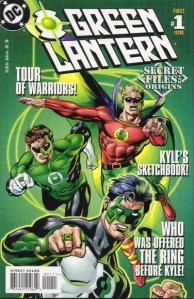 It may seem like a bit of a cheat to use this as my second “wish,” since Geoff Johns has already specifically stated restoring a sense of legacy is one of the goals of Rebirth, but I think it’s worthwhile to explore what exactly that means and what I hope it will mean to DC.
 Look, I get the desire to give Superman the significance of being first. He’s earned it. But with a restored multiverse it’s easy to give him that honor while still having a “prime” Superman who lives in a world of earlier heroes. Even if they aren’t currently being featured anywhere, characters like the JSA, the Seven Soldiers of Victory, and the All-Star Squadron are part of the fabric of DC Comics. Removing them from DC’s history robs us just as much as we would be robbed by removing Thomas Jefferson and Benjamin Franklin from American history.
 One of the main complaints levied against DC in recent years – and one that is difficult to argue with – is that the books largely have taken on a grim tone. That’s fine in some cases, but it should never be the case across the board. Sure, Batman lives in darkness, and the members of the Suicide Squad are inherently dirty characters, but that can’t apply to everybody. Superman is, and should be, a symbol of hope. Green Lantern literally makes things out of light. The Flash… hell one of his main foes is a talking gorilla. Be it Jay, Barry, Wally, or other, nobody should enjoy his life more than the fastest man alive.
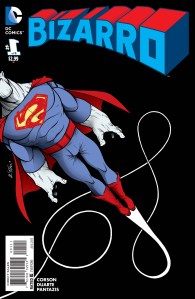
 DC has begun to make strides in this direction. Harley Quinn is a mostly-lighthearted book, as is the new Burnside era of Batgirl. Last year’s Bizarro and Bat-Mite miniseries were both wonderful. But that’s just a start. DC’s most popular media incarnations at the moment are the Flash and Supergirl TV shows – both of which are unabashedly fun – and Arrow, which embraces darkness more fully. And they all work. And they all fit together. And it’s a beautiful thing. The creators of these shows have mined the rich history of the characters for the wonderful things that made them last, while at the same time recognizing that they don’t have to be exactly the same to coexist.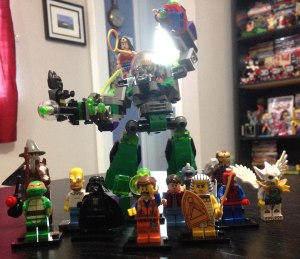
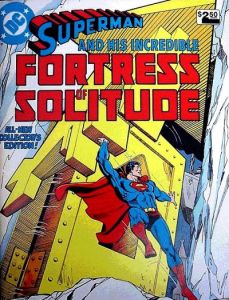 Wish #1: Superman’s Fortress of Solitude.
 Inside, we need all the best parts of the Fortress from the assorted varieties: the crystal control panel, the statues of Jor-El and Lara, and the cosmic zoo (complete with a few alien animals, like the metal-eater). But a LEGO set isn’t just about construction, it’s also about playability. We need some characters. Superman, of course, should be included, as well as the Fortress’s other part-time resident, Supergirl. We could also include Lois Lane in arctic gear, a Superman robot or two, and Kal-El’s robotic valet, Kelex. And you can’t have a superhero playset without villains, can you? Coincidentally, the two best battles ever to take place in the Fortress both come from stories by Alan Moore. I would throw in Brainiac and Lex Luthor from “Whatever Happened to the Man of Tomorrow?” (bonus points if they can make the figures combine), and a maxifigure of Mongul with the Black Mercy flower from “For the Man Who Has Everything.” Alan Moore would probably despite seeing a toy set inspired by his stories, which of course is the best argument to release it.
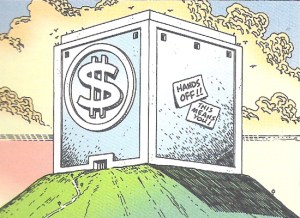 Wish #2: Scrooge McDuck’s Money Bin
 Speaking of Scrooge, he wouldn’t be alone in minifig land. He’d be accompanied by his nephews, Huey, Dewey, and Louie, as well as his ward Webigail. (Look, I know she’s not everyone’s favorite character, but there just weren’t enough females on that show, and we need her.) For villains, we’d have Ma Beagle and her Beagle Boys attempting to break in.
 Wish #3: The Warner Brothers’ (and the Warner Sister) Water Tower
 The All New Showcase