 For most of 2017, it feels like we’ve been strapped into Mr. Toad’s Wild Ride and forbidden from getting off (the Haunted Mansion just taunting us in the distance, people casually chomping on Mickey Mouse ice cream bars, enormous turkey legs, and Dole Whips while we starve to death in our carts… man, I’ve got to stop writing these things before lunch). And just when you thought it couldn’t get crazier, after weeks of rumors and negotiations, it seems all but certain that the Fox company is ready to sell off its entertainment branches to the Walt Disney Corporation and Shadow Government. This is a huge deal with massive implications for many aspects of media and popular culture, and frankly, I’m not in the mind to talk about all of them considering how many poop-filled diapers I’ve had to deal with lately.
Disney has been an acquisition machine for years now, gobbling up Pixar, then the Muppets, then Marvel and Lucasfilm. Let’s face it, they’re one Walmart merger away from total world domination. And certainly, with the Fox entertainment properties under the Disney roof, a lot of things would change. But there are a million thinkpieces out there about that. Instead, let’s take a minute to mention a couple of the things I hope don’t change too much with the new Disney-Fox Global Consortium firmly in place.
1. The autonomy of the 20th Century Fox movie studio: Fox is one of the grand old dames of the movie business, having been around since 1935 and giving us hundreds of classic, timeless, unforgettable films, and also James Cameron’s Avatar. Disney, of course, has its own cinematic pedigree. The big difference here is that Fox’s films have run the gamut of genre and audience types. The Disney brand, however, is far more associated with family fare. Even bringing in Marvel and Star Wars hasn’t changed that dramatically — while those properties may hit an older audience than The Little Mermaid, there’s still nothing there you may be uncomfortable watching with your mom in the room.
Fox, on the other hand, gave us the likes of Aliens, Predator, Planet of the Apes, Die Hard, and hundreds of other films (both wonderful and terrible) that would be an odd fit under the Disney banner. If Disney simply folds all of these into their current operations, it seems unlikely that these franchises or others of a similar temperament would have a home. On the other hand, Disney doesn’t really have an arm that makes entertainment for older audiences anymore. Miramax was sold off a few years ago, and their Touchstone banner is basically just a distribution arm these days, not having made any films of its own in nearly a decade. If 20th Century Fox is allowed to continue, it could fill that niche in the Disney portfolio of films for older audiences.
2. Animation “Domination.” Disney, for decades, was the undisputed juggernaut of animation in film. Its television competitors — even when the likes of Hanna-Barbera created memorable characters — often paled in comparison to Disney quality. That has changed drastically in the last two decades, with Dreamworks, Warner Brothers, Universal, and — yep — Fox stepping up their game to create franchises that legitimately compete with Disney. And on TV, Fox has a foot in something that Disney has never truly dabbled in: animation for grown-ups.
The Simpsons, obviously, is the perennial classic. Futurama was even better. King of the Hill is remembered fondly, Bob’s Burgers is the current Emmy-winning darling. Family Guy is… also a thing. Hopefully, Disney won’t curtail these things or try to reshape them into the mold of their own animated properties. Things like Ducktales, Gravity Falls, Phineas and Ferb and Milo Murphy’s Law are great, but it would be a shame if the rules that govern those shows were to be shifted over to the Belcher family.
3. Fox’s Marvel Universe. Yeah, the one thing that everybody wants is to see the X-Men interact with the Marvel Cinematic Universe. Hugh Jackman even suggested once that doing an Avengers movie would be the only way he’d play Wolverine again. And has any superhero franchise ever needed a new approach as desperately as the Fantastic Four?
But having said that, I honestly think it’s a good thing that, when the MCU started, Marvel didn’t have all of their big guns under one roof. If they’d had the FF, X-Men, and Spider-Man, do you think Marvel’s first film would have been Iron Man? Hell no. They played with the toys that were left in the box, and as a result, they did something excitingly different that has paid off in spades. If they could have made an X-Men movie, would they have gambled on something like the Guardians of the Galaxy? Would we have seen Ant-Man or Dr. Strange on the screen? It seems highly unlikely.
And on the other side, look at the X-Men films. Okay, Wolverine and Deadpool are popular enough that they could have probably landed their own movies eventually. But at present, Fox does two or three X-Men films a year. So does the MCU. If they’re all folded under one banner, that’s likely to halve the output. Those same three guys on the internet who keep complaining that there are too many superhero movies will probably be thrilled, of course, but what about the rest of us? With the MCU only having room for one X-movie a year, would we get weird things like the upcoming New Mutants movie (which, as per the trailer, seems more like a horror film than a superhero movie), or the Madrox film with James Franco that was just announced? No, not every Fox X-Men film has been gold, but I think it’s worth the risk of the occasional clunker to have the chance to do things like Logan, which would never fit into the MCU.
The best-case scenario, I think, would be for an arrangement similar to the Marvel/Sony deal for Spider-Man, where crossover is allowed, but each company (or in this case, each Disney subsidiary) is mostly allowed to do its own thing.
As always, though, this is just me spitballing. What actually happens with all of this is going to be up to 2018 to decide. May it be a little tamer than its predecessor, because I for one couldn’t take 2017 all over again.




 In case you somehow missed it, the Deadpool movie was released last weekend and immediately began shattering box office records: best February opening of all time, best opening ever for an R-rated movie, best opening ever for a first-time director (that’d be Tim Miller), and it came in third in the swimsuit competition. And of course, as always, the movie industry began to thoughtfully and meticulously scrutinize the film’s success to determine what qualities helped it reap the bounty, then implement carefully-considered strategies to create new content that may also be prosperous for the studios.
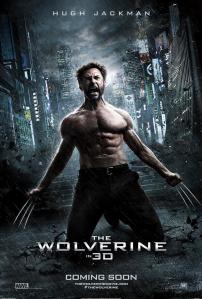 And that brings us to the second question: why was Deadpool a movie people wanted to see? The blood? We have the news for that. The nudity? We have the Internet. The profanity? We have public high schools. All of these are easy answers, and all of these are wrong. And yet, when Fox immediately followed the box office number announcement by saying the third Wolverine movie will be rated R, they’re essentially saying that’s the reason that Deadpool worked. This is incredibly small-minded.
 The best superhero movies (and in fact, most of the best adaptations of any kind) are those that maintain the spirit and feel of the source material: Richard Donner’s Superman, the first two Sam Raimi Spider-Man movies, and most of the Marvel Cinematic Universe work for precisely this reason. People who have read about a character for years – decades even – don’t want to see a version of a character whipped up by committee, they want to see the version they love. (This, of course, will cause debate when a character has been around long enough that there are multiple valid interpretations, but that’s a discussion for another time.)
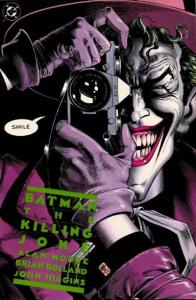 Let’s not forget that tone is dependent on the individual story as well. There was a lot of buzz last year when the producers of the upcoming Batman: The Killing Joke animated movie announced they were given permission by the studio to go for an R-rated film. It doesn’t have to be, but this is the story that forever entrenched the Joker as a true icon of evil. Gone was the bank robbing clown of the Silver Age – now he was a horrific, unhinged psychopath acting out on a twisted fixation with Batman by torturing his friends. It would be hard to tell that story faithfully and still maintain a PG-13. But that doesn’t mean a Ben Affleck Batman movie or an animated version of the first appearance of Bat-Mite should suddenly be rated R.
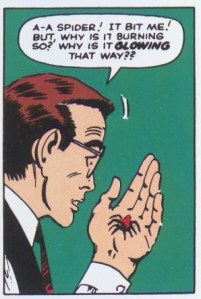 What does apply, however, is that people get tired of seeing the same thing. Origin stories, for example. Not just comic fans, but viewers in general are done with origin stories. Nobody needs to see Krypton blow up, Thomas and Martha Wayne gunned down, or Peter Parker bitten by a spider ever again. We get it.
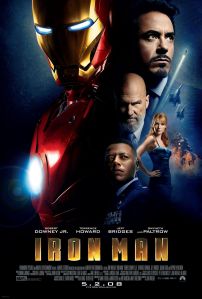 And that brings me to the most important part of Deadpool’s success. It didn’t matter that it was an origin, because it still felt different from any other superhero movie of the last 17 years. (I consider the modern era of superhero movie to have begun with 1999’s Blade. You know, that other R-rated Marvel movie everybody seems to have forgotten about.) Look at the major successes since then. After the first few years, when superheroes were still a novelty, the biggest movies all brought something new to the table. Iron Man was cocky, witty, and did away with that secret identity jazz right away. It was unique at the time. What’s more, the after-credits stinger (another novelty in 2008) opened the doors for the then-revolutionary Marvel Cinematic Universe. That eventually led to Avengers, another mega-hit, because we had never before seen six superheroes from four different movies come together as a team. The best movies of the eight years since Iron Man all bring something different to the superhero. Guardians of the Galaxy was a space opera. Captain America: The Winter Soldier was a political thriller. The Dark Knight was an epic crime drama. And none of them – even the ones that were sequels to other movies – felt like anything else we had ever seen.
 In an odd way, this actually makes Suicide Squad the most interesting superhero movie for the rest of 2016. I’m the most die-hard Superman fan you’ll find, and I’ve been waiting to see him on screen with Batman and Wonder Woman since I learned how to read. I couldn’t be more excited for that movie. But Suicide Squad is the first time, as far as I can remember, that a superhero movie has actually starred the villains. (You could make an argument for Magneto and Mystique in the most recent X-Men movies, but the moral ambiguity in those films is so thick that nobody could hear you anyway.) We’ve seen villain-starring comics plenty of times, but it’s never really happened on screen. That means the success or failure of this movie will be one for the books. The trailer was very well-received and people seem to be excited about it.






















 The All New Showcase