 Eighty years ago today, a comic book hit the newsstands. It cost ten cents, and the vast majority of people who purchased it — as most people did in 1938 — read the book once and then threw it away. Those people who didn’t, if they still happen to have the book and it’s in decent condition, are sitting on a fortune. That book changed everything. It invented a genre, it left an indelible mark across popular culture, and it gave this woeful world a hero that has left a mark on everything we know.
April 18, 1938, was the day Action Comics #1 was released to the world. It was the day Jerry Siegel and Joe Shuster gave us Superman.
 Today — thanks to a little creativity with the release schedule, DC Comics is releasing Action Comics #1000, the first superhero comic book ever to hit that milestone number. I could spend hours waxing on about the importance of that character, of that book, regaling you with the hundreds of amazing writers and artists who have crafted tales of the man of steel over the last 80 years. But there are plenty of other people writing about that today, many of them far more qualified than I. Instead, let me tell you why Action Comics and Superman matter to me.
Superman is considered the first superhero. Clearly, there are earlier characters that include many of the tropes of the genre (Philip Wylie’s Gladiator, Zorro, the Scarlet Pimpernel, and so forth), but Superman was the character that codified everything we think of when we think of the word: the costume, the powers, the secret identity, the tireless crusade against evil. And although there were many, many imitators, for a very long time Superman was the most popular of them all. Things changed during the “Marvel Age” of the 1960s, when characters like Spider-Man and the X-Men gained traction and became the choice of the sophisticated comic book aficionado. And to be fair, those characters had faults and flaws that made them more realistic and more relatable than a lot of the heroes that had existed before then, the Superman of the time included.
 Over the years, there have been attempts every so often to “reinvent” Superman. Some of them have been very successful, some have not. As such, many people complain that the character is “boring” or “too powerful” or “old fashioned,” as if there’s anything wrong with that last one. This results in further reinventions that don’t work, because people lean too hard in the other direction, making a character that loses contact with his humanity. Whenever I hear a writer wants to focus on the fact that Superman is an alien, it makes me nervous, because that’s not what he’s about.
W hat makes Superman so great is that — despite the fact that he was born on another planet — he is the most human hero of them all. His power comes from Krypton, but his soul was forged in the farmland of Kansas, brought up by two good, kind people to be a good, kind person. With his power, Superman could take over the world. Instead, he chooses to defend it. This sounds a little trite, but in truth, it’s the most important thing about the character. Who among us, if given any super power, would never succumb to the urge to use it selfishly, even just a little? If given the power to crush diamonds out of coal, wouldn’t you be living in a mansion? If you could could move faster than the eye could see, might not an errant pitch just happen to go the right way for your favorite baseball team? If you had heat vision, how many jerks who cut people off in traffic would find their tires suddenly melted?
Or maybe I’m just projecting.
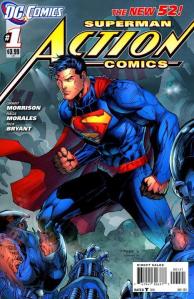 The point is, Superman could do all these things, but doesn’t. More to the point, he chooses not to. It’s not that he never feels the temptation, it’s that he knows he can’t give into it. That’s the kind of strength that makes the character fascinating. That’s the kind of thing that he got from the Kansas farmland. The greatest stroke of luck the citizens of the DC Universe ever had is that Kal-El’s spaceship landed on the property of Jonathan and Martha Kent.
A few years ago, DC pulled back from the hero they’d had and made him younger, nullified his marriage to Lois Lane, and tried to “update” him again. A few years later they realized the error of their ways. Now, not only are Superman and Lois married, but they have a son: Jon Kent, Superboy. In nearly 30 years of reading Superman comic books, nothing has made me happier than the adventures of Super-dad and his boy. And a great deal of that probably has to do with the fact that, a little over a year after this became DC canon, I became a dad myself. Superman has always been the man I wish I could be. Now, when I read Action Comics, I see the father — besides my own — that I aspire to be the most.
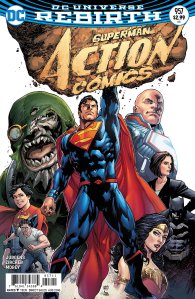 That, you see, is what Superman is. One of the “updates” that seems to have stuck is the idea that his symbol, the “S-shield,” is actually the Kryptonian symbol for the word “hope.” This couldn’t be more appropriate. In the world of the comics, movies, and TV shows, that symbol means that you don’t need to be afraid: no matter what is happening Superman (or sometimes Supergirl, or Superboy, or if the writers are really feeling playful, Krypto the Super-Dog) is there to save the day. In our world, the world that needs a hero so desperately, it’s a reminder of an ideal. Superman is about having inner strength to do the right thing, to protect people who need it, to shine a light of hope where none exists.
It can be a hard thing, sometimes.
But 1000 issues later, I feel as if we need that symbol more than ever.




 DC Comics is going to be giving the dirt on Rebirth this morning at Wondercon, and they’re livestreaming the event on their
 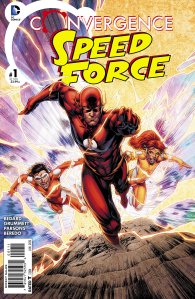 ne of the things the New 52 did was roll back the ages of most of DC’s main characters. In so doing, many of the family units that previously existed were eradicated. The children of Wally West, Roy Harper, Alan Scott and others never existed at all. There was later a hullabaloo when the writers of Batwoman walked off the book, angry that DC wouldn’t allow them to marry off Kate Kane to Maggie Sawyer. Some took this as DC being opposed to gay marriage, which was ludicrous. If they had an anti-gay mindset they never would have published the book in the first place. No, it was any marriage DC was opposed to. The marriages of Lois and Clark, Barry and Iris, Arthur and Mera – all had been annulled in the most literal way possible. Only Animal Man seemed to survive with his family intact, and that is no doubt because virtually every good Animal Man story ever written has included his wife and children at the very core of it.
 Family is only an obstacle if the writer is narrow-minded enough to make it so. Bill Willingham’s Fables not only went on another 100 issues after the marriage of Snow White and Bigby Wolf, but their cubs became a vital part of the engine of that series. The Fantastic Four has always been about family, but the introduction of Reed and Sue’s children have made it unique among mainstream comics. Perhaps my favorite comic being published right now is Superman: Lois and Clark, precisely because it gives us a Superman in a family dynamic we’ve never seen before. Clark and Lois – those from the Pre-Flashpoint DCU – now live in the current DCU. Nobody knows who they really are, and they have only each other to rely on, while at the same time trying to raise and protect a son who is unaware of his parents’ great secret. It’s wildly fun. We know there will be a post-Rebirth title called The Super-Man. If that acts as the lifeboat for these characters, I’ll be overjoyed.
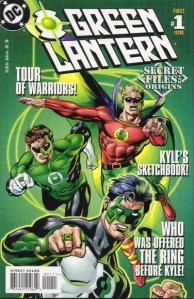 It may seem like a bit of a cheat to use this as my second “wish,” since Geoff Johns has already specifically stated restoring a sense of legacy is one of the goals of Rebirth, but I think it’s worthwhile to explore what exactly that means and what I hope it will mean to DC.
 Look, I get the desire to give Superman the significance of being first. He’s earned it. But with a restored multiverse it’s easy to give him that honor while still having a “prime” Superman who lives in a world of earlier heroes. Even if they aren’t currently being featured anywhere, characters like the JSA, the Seven Soldiers of Victory, and the All-Star Squadron are part of the fabric of DC Comics. Removing them from DC’s history robs us just as much as we would be robbed by removing Thomas Jefferson and Benjamin Franklin from American history.
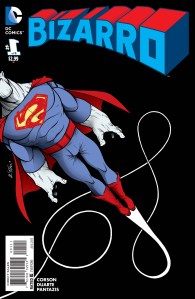 One of the main complaints levied against DC in recent years – and one that is difficult to argue with – is that the books largely have taken on a grim tone. That’s fine in some cases, but it should never be the case across the board. Sure, Batman lives in darkness, and the members of the Suicide Squad are inherently dirty characters, but that can’t apply to everybody. Superman is, and should be, a symbol of hope. Green Lantern literally makes things out of light. The Flash… hell one of his main foes is a talking gorilla. Be it Jay, Barry, Wally, or other, nobody should enjoy his life more than the fastest man alive.
 DC has begun to make strides in this direction. Harley Quinn is a mostly-lighthearted book, as is the new Burnside era of Batgirl. Last year’s Bizarro and Bat-Mite miniseries were both wonderful. But that’s just a start. DC’s most popular media incarnations at the moment are the Flash and Supergirl TV shows – both of which are unabashedly fun – and Arrow, which embraces darkness more fully. And they all work. And they all fit together. And it’s a beautiful thing. The creators of these shows have mined the rich history of the characters for the wonderful things that made them last, while at the same time recognizing that they don’t have to be exactly the same to coexist.
 In case you somehow missed it, the Deadpool movie was released last weekend and immediately began shattering box office records: best February opening of all time, best opening ever for an R-rated movie, best opening ever for a first-time director (that’d be Tim Miller), and it came in third in the swimsuit competition. And of course, as always, the movie industry began to thoughtfully and meticulously scrutinize the film’s success to determine what qualities helped it reap the bounty, then implement carefully-considered strategies to create new content that may also be prosperous for the studios.
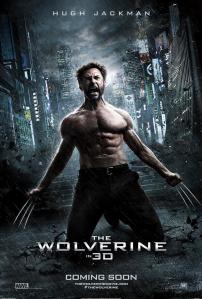 And that brings us to the second question: why was Deadpool a movie people wanted to see? The blood? We have the news for that. The nudity? We have the Internet. The profanity? We have public high schools. All of these are easy answers, and all of these are wrong. And yet, when Fox immediately followed the box office number announcement by saying the third Wolverine movie will be rated R, they’re essentially saying that’s the reason that Deadpool worked. This is incredibly small-minded.
 The best superhero movies (and in fact, most of the best adaptations of any kind) are those that maintain the spirit and feel of the source material: Richard Donner’s Superman, the first two Sam Raimi Spider-Man movies, and most of the Marvel Cinematic Universe work for precisely this reason. People who have read about a character for years – decades even – don’t want to see a version of a character whipped up by committee, they want to see the version they love. (This, of course, will cause debate when a character has been around long enough that there are multiple valid interpretations, but that’s a discussion for another time.)
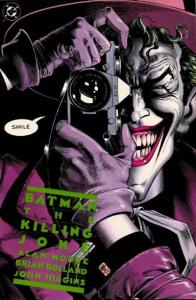 Let’s not forget that tone is dependent on the individual story as well. There was a lot of buzz last year when the producers of the upcoming Batman: The Killing Joke animated movie announced they were given permission by the studio to go for an R-rated film. It doesn’t have to be, but this is the story that forever entrenched the Joker as a true icon of evil. Gone was the bank robbing clown of the Silver Age – now he was a horrific, unhinged psychopath acting out on a twisted fixation with Batman by torturing his friends. It would be hard to tell that story faithfully and still maintain a PG-13. But that doesn’t mean a Ben Affleck Batman movie or an animated version of the first appearance of Bat-Mite should suddenly be rated R.
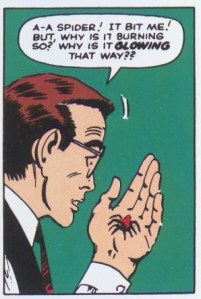 What does apply, however, is that people get tired of seeing the same thing. Origin stories, for example. Not just comic fans, but viewers in general are done with origin stories. Nobody needs to see Krypton blow up, Thomas and Martha Wayne gunned down, or Peter Parker bitten by a spider ever again. We get it.
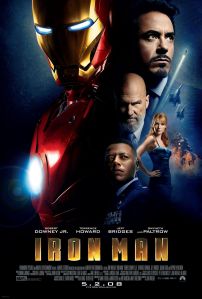 And that brings me to the most important part of Deadpool’s success. It didn’t matter that it was an origin, because it still felt different from any other superhero movie of the last 17 years. (I consider the modern era of superhero movie to have begun with 1999’s Blade. You know, that other R-rated Marvel movie everybody seems to have forgotten about.) Look at the major successes since then. After the first few years, when superheroes were still a novelty, the biggest movies all brought something new to the table. Iron Man was cocky, witty, and did away with that secret identity jazz right away. It was unique at the time. What’s more, the after-credits stinger (another novelty in 2008) opened the doors for the then-revolutionary Marvel Cinematic Universe. That eventually led to Avengers, another mega-hit, because we had never before seen six superheroes from four different movies come together as a team. The best movies of the eight years since Iron Man all bring something different to the superhero. Guardians of the Galaxy was a space opera. Captain America: The Winter Soldier was a political thriller. The Dark Knight was an epic crime drama. And none of them – even the ones that were sequels to other movies – felt like anything else we had ever seen.
 In an odd way, this actually makes Suicide Squad the most interesting superhero movie for the rest of 2016. I’m the most die-hard Superman fan you’ll find, and I’ve been waiting to see him on screen with Batman and Wonder Woman since I learned how to read. I couldn’t be more excited for that movie. But Suicide Squad is the first time, as far as I can remember, that a superhero movie has actually starred the villains. (You could make an argument for Magneto and Mystique in the most recent X-Men movies, but the moral ambiguity in those films is so thick that nobody could hear you anyway.) We’ve seen villain-starring comics plenty of times, but it’s never really happened on screen. That means the success or failure of this movie will be one for the books. The trailer was very well-received and people seem to be excited about it.
 The All New Showcase