 Eighty years ago today, a comic book hit the newsstands. It cost ten cents, and the vast majority of people who purchased it — as most people did in 1938 — read the book once and then threw it away. Those people who didn’t, if they still happen to have the book and it’s in decent condition, are sitting on a fortune. That book changed everything. It invented a genre, it left an indelible mark across popular culture, and it gave this woeful world a hero that has left a mark on everything we know.
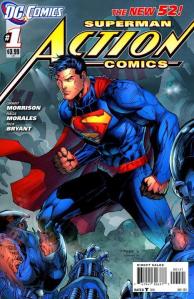
April 18, 1938, was the day Action Comics #1 was released to the world. It was the day Jerry Siegel and Joe Shuster gave us Superman.
 Today — thanks to a little creativity with the release schedule, DC Comics is releasing Action Comics #1000, the first superhero comic book ever to hit that milestone number. I could spend hours waxing on about the importance of that character, of that book, regaling you with the hundreds of amazing writers and artists who have crafted tales of the man of steel over the last 80 years. But there are plenty of other people writing about that today, many of them far more qualified than I. Instead, let me tell you why Action Comics and Superman matter to me.
Superman is considered the first superhero. Clearly, there are earlier characters that include many of the tropes of the genre (Philip Wylie’s Gladiator, Zorro, the Scarlet Pimpernel, and so forth), but Superman was the character that codified everything we think of when we think of the word: the costume, the powers, the secret identity, the tireless crusade against evil. And although there were many, many imitators, for a very long time Superman was the most popular of them all. Things changed during the “Marvel Age” of the 1960s, when characters like Spider-Man and the X-Men gained traction and became the choice of the sophisticated comic book aficionado. And to be fair, those characters had faults and flaws that made them more realistic and more relatable than a lot of the heroes that had existed before then, the Superman of the time included.
 Over the years, there have been attempts every so often to “reinvent” Superman. Some of them have been very successful, some have not. As such, many people complain that the character is “boring” or “too powerful” or “old fashioned,” as if there’s anything wrong with that last one. This results in further reinventions that don’t work, because people lean too hard in the other direction, making a character that loses contact with his humanity. Whenever I hear a writer wants to focus on the fact that Superman is an alien, it makes me nervous, because that’s not what he’s about.
W hat makes Superman so great is that — despite the fact that he was born on another planet — he is the most human hero of them all. His power comes from Krypton, but his soul was forged in the farmland of Kansas, brought up by two good, kind people to be a good, kind person. With his power, Superman could take over the world. Instead, he chooses to defend it. This sounds a little trite, but in truth, it’s the most important thing about the character. Who among us, if given any super power, would never succumb to the urge to use it selfishly, even just a little? If given the power to crush diamonds out of coal, wouldn’t you be living in a mansion? If you could could move faster than the eye could see, might not an errant pitch just happen to go the right way for your favorite baseball team? If you had heat vision, how many jerks who cut people off in traffic would find their tires suddenly melted?
Or maybe I’m just projecting.
 The point is, Superman could do all these things, but doesn’t. More to the point, he chooses not to. It’s not that he never feels the temptation, it’s that he knows he can’t give into it. That’s the kind of strength that makes the character fascinating. That’s the kind of thing that he got from the Kansas farmland. The greatest stroke of luck the citizens of the DC Universe ever had is that Kal-El’s spaceship landed on the property of Jonathan and Martha Kent.
A few years ago, DC pulled back from the hero they’d had and made him younger, nullified his marriage to Lois Lane, and tried to “update” him again. A few years later they realized the error of their ways. Now, not only are Superman and Lois married, but they have a son: Jon Kent, Superboy. In nearly 30 years of reading Superman comic books, nothing has made me happier than the adventures of Super-dad and his boy. And a great deal of that probably has to do with the fact that, a little over a year after this became DC canon, I became a dad myself. Superman has always been the man I wish I could be. Now, when I read Action Comics, I see the father — besides my own — that I aspire to be the most.
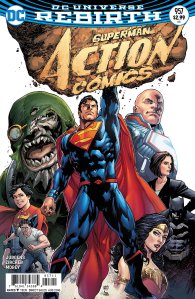 That, you see, is what Superman is. One of the “updates” that seems to have stuck is the idea that his symbol, the “S-shield,” is actually the Kryptonian symbol for the word “hope.” This couldn’t be more appropriate. In the world of the comics, movies, and TV shows, that symbol means that you don’t need to be afraid: no matter what is happening Superman (or sometimes Supergirl, or Superboy, or if the writers are really feeling playful, Krypto the Super-Dog) is there to save the day. In our world, the world that needs a hero so desperately, it’s a reminder of an ideal. Superman is about having inner strength to do the right thing, to protect people who need it, to shine a light of hope where none exists.
It can be a hard thing, sometimes.
But 1000 issues later, I feel as if we need that symbol more than ever.
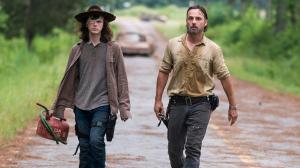 In the mid-season finale of The Walking Dead, Chandler Riggs’s character Carl was revealed to have been bitten by a walker. This was followed by a few months of cries, outrage, and death threats against showrunner Scott Gimple, many of them made by the same people on the internet who wouldn’t shut up about how much they hated Carl a year ago. I kid (sort of), but it’s a testament to how good an actor Chandler Riggs is that he took a character that was a meme synonymous with the obnoxious child in a life-or-death situation and turned him into someone that fans were genuinely upset to see die. And in fact, he did die in the midseason premiere last weekend… which suffered record-low ratings for the show.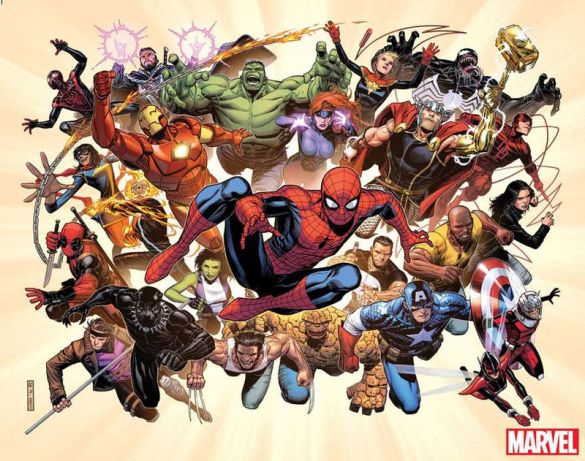
 The year after the New 52, which was highly successful at first, we got “Marvel Now!,” in which everything was relaunched and changed and different except for the stuff that wasn’t. DC Rebirth was a reaction to dwindling returns from the New 52, it was a course-correction intended to recover the things lost in the New 52, and almost two years later it is still largely viewed as a critical and commercial success.


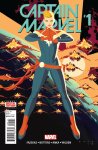
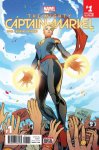

 Perhaps the most galling thing about this, though, is that the most recent Marvel relaunch isn’t even over yet. Marvel Legacy began with a one-shot that introduced things like an Avengers team from the dawn of time (that apparently won’t show up until the Fresh Start reboot) and the resurrection of the original Wolverine, in a story that hasn’t shown up except in a few “post-credits” pages that don’t make a damn bit of sense. I have to reiterate here: Marvel will still be telling stories that began in the previous relaunch when the new relaunch begins.


 For most of 2017, it feels like we’ve been strapped into Mr. Toad’s Wild Ride and forbidden from getting off (the Haunted Mansion just taunting us in the distance, people casually chomping on Mickey Mouse ice cream bars, enormous turkey legs, and Dole Whips while we starve to death in our carts… man, I’ve got to stop writing these things before lunch). And just when you thought it couldn’t get crazier, after weeks of rumors and negotiations, it seems all but certain that the Fox company is ready to sell off its entertainment branches to the Walt Disney Corporation and Shadow Government. This is a huge deal with massive implications for many aspects of media and popular culture, and frankly, I’m not in the mind to talk about all of them considering how many poop-filled diapers I’ve had to deal with lately.
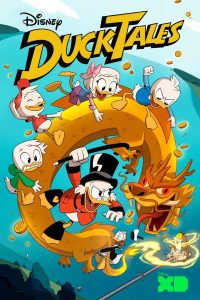 On the one hand, the world is once again on the brink of nuclear annihilation. On the other hand, tomorrow is the premiere of the first episode of DuckTales in 27 years, so things can’t actually be that bad.
 The original DuckTales premiered in 1987, when I was about to turn ten years old, and I watched it, like every other child in America. I liked it. I enjoyed it. It was a fun show, with lots of adventure on top of the humor. Scrooge and his nephews went out and found lost cities of gold and plunged the depths of the oceans. They encountered a spacecraft full of miniscule alien ducks and a subterranean race of creatures that looked like nothing more than rubber balls with arms and a face. It was glorious. But I was at an odd age, one where I started to feel like I was a little too old for certain things (this was not a stage that lasted very long for me, but there it was nonetheless), among them, Disney comics. I was into comic books by then, big-time, but my reading time was devoted to things like Spider-Man, Green Lantern, and a mysterious superhero group that has been lost to time called the Fantastic Four. I was ten. Nearly a teenager. Who had time for comics with a bunch of ducks?
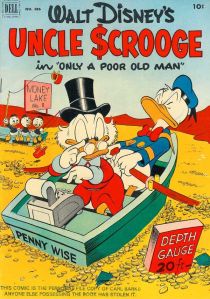 I got older and I got over myself, which is something that a lot of people never figure out how to do. I realized the notion of “outgrowing” something that is legitimately good is ridiculous, and I found my way back to Disney comics. Specifically, I found myself reading more and more of the works of Carl Barks. Barks, a one-time animator at Disney, really made his mark when he switched to comic books. It was there that he created Scrooge McDuck and made him a globe-trotting adventurer, one who found lost cities and sunken continents, tiny aliens from outer space… and… underground dwellers who looked like rubber balls?
 (Side note: If the people at Disney have a brain in their heads, they’ll lock in David Tennant to star in a big-screen adaptation of Life and Times RIGHT THE HELL NOW.)


 The All New Showcase